Tuesday, January 30, 2007

Baby Tana!


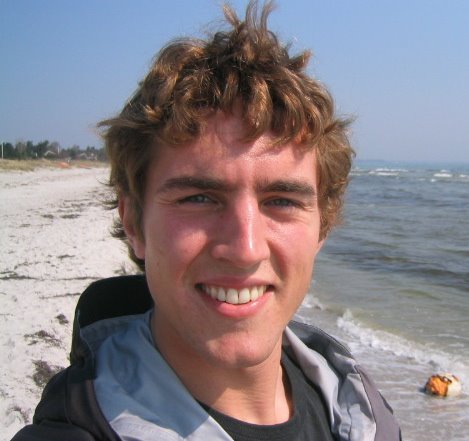
This last weekend I went back to our training village of Vaie'e to visit my host family and to visit the new baby my host-parents had. They chose to name him Tana (my Samoan name). Me with the new bundle of joy.

Friday, January 26, 2007

Garden Party


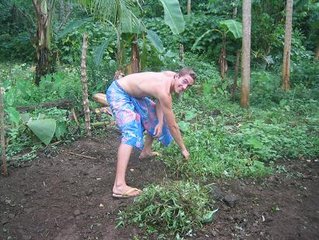
As part of a secondary project that I am trying to pursue I asked my host-father Afegogo, who is also the village mayor, if I could start a garden. At first he and the rest of my host-family were a little skeptical. They told me that I wouldn’t want to do that because I would get dirty. They tend to have a specific idea on how Westerners are. After reassuring them my host-brother Ma’anima and I went into the jungle, machetes in hand to cut us down some trees to make fence posts. Even at the tender age of 14 Ma’anima can embarrass me with machete wielding technique. When the rest of the family saw us, hands dirtied, they assumed that I was serious and really got into it. The next day I saw Afegogo back on the proposed area chopping down everything he could make posts out of and cutting off branches to let in more light. He told me that we will grow lots of cabbage and other assorted vegetable, we will make it big, and it will be an example for the whole village. So this has got me excited with the possibility of getting other families to start gardens and hopefully getting the school involved with one complemented by nutrition classes. Also, I’m looking forward to eating some vegetables myself.

I thought it would be fun to have a quarterly garden report for the blog with a photo to show progress and set backs. So here is the first one. I know currently it may not yet be a garden party so much as a small gathering of friends but give it time and we’ll see in three months.

Samoan Maliu (Funeral)


I went to my second Samoan wedding last week in the neighboring village of Utulaelae. Actually, I went to the last day of the multi-day affair. On this day the family of the deceased who was an older matai (village chief) began cooking in the early morning hours in preparation of the several hundred meals consumed throughout the day by family, relatives, and fellow villagers on site, as well as, taken by visitors to their own villages to be given out to their families and friends. As part of the customs this day relatives from outside the village come to exchange gifts. This exchange (usually fine mats, boxes of tin fish and corned beef, slaughtered pigs and cattle, cash, or any combination of these that you can imagine) I think is a real hallmark of the Samoan culture. I just now have enough understanding of the language and culture to comprehend the ins and outs of this highly formalized affair. For example, the deceased’s cousin from a village across the island comes with thirty boxes of canned corned beef and five fine mats, usually presented like the picture above. They all sit in a group at the very front of the yard with the orator (a specific kind of high chief) standing in front with his staff and whisk. The orator then presents their gifts to a similar group of the deceased’s family also lead by an orator. This is very formal respectful language that I sometimes don’t understand. The gifts are accepted then the orator (to continue my above example) may give back the equivalent of %120 to 150 of the amount received, such as a cow, pig, six different fine mats, and 200 Samoan tala. Of course this can very widely but just to give an idea. Throughout the day many groups of relatives may come by to show their respects depending on the size of the family and if you do the math this can be a large burden on the family. From what I’ve been told, funerals are a common time for relatives to send financial help from abroad (usually New Zealand, Australia, and the U.S.) and/or make the trip back themselves.

The day I attended there is much more than just an exchange of gifts. The entire day the ‘daughters if the village’ (girls born in the village) sit around the body in an open fale and sing together. Matais of the village come in a formal offering of palms (pictured above). Around a dozen people are cooking food in huge pots and pans constantly. There is really no somber feelings the whole day like I imagine an American funeral. People are laughing and joking around, visiting with friends and above all eating a lot. *Footnote on the last comment, the time I did see solemn faces was when the proceedings are done and the body is moved from the house to the grave in front (pictured below).

Samoans love to talk to me about the differences between the palangi life and the fa’asamoa life. It’s interesting to hear how some people react when I tell them that American funerals last maybe an afternoon and it is a relatively straightforward ordeal. I can tell that some of them are a little envious of the simplicity we have but some just act nonchalant and say “well this is just our culture.” I’m glad that they have kept their old ways even in the light of Western influence and Christianity.

Tuesday, October 24, 2006

First Samoan Wedding


I went to my first bona-fide Samoan wedding last weekend in a village called Salani, only two away from mine but seperated by a river without a bridge. I planned ahead and wore swimming shorts underneath my formal lavalava so when I came to river I held my clothes over my head as I swam the fifty feet or so to the other side. The wedding itself isn't too much different from the States because it is a Christian wedding but there are a few subtle differences. To begin the church procession the groom sat in the front of the church all by his lonesome looking straight ahead for a good ten minutes. I was thinking that if you had second thoughts it would be a long ten minutes. The other amusing aspect was the consumating kiss, which I was waiting for because I had yet to see two Samoans kiss in public as it is a taboo. So when they exchanged a quick and very awkward peck I could tell it was one of those Western rituals that still hasn't quite caught up to the Samoan way. Afterward it was like a typical Samoan fa'alavelave, lots of eating, singing, and dancing. Of course, everyone there extended the most cordial hospitality you could imagine to me. Samoans never cease to amaze me with their kindness.

Monday, October 02, 2006

Integration, etc.


Well four months in country, one in my new village. I’ve been integrating into my village, practicing the language, doing family visits, and participating in the various cultural events. I have posted the picture above from a fiafia organized by the Methodist churches in my district. To begin the festivities there was a parade of decorated pickup trucks with a dressed up male on the back of each with the villagers walking in tow. I was put up in the traditional garb of a fine mat wrapped around, orator’s staff, and whip while my fellow villagers urged me to dance and call out to the spectators. Not the easiest thing to do at 6 am. When we reached our destination the dancing and singing presentations from the six participating villages ensued. So I changed clothes and did our Samoan dance. It’s a little intimidating knowing that every eye in the audience is most likely trained right on the only white person but I would say that I am getting used to dancing and singing in front of hundreds of people.

The environment around my village is amazing. Whenever I feel the need to relax or have some privacy I can go for a bike ride up the mountain through the jungle, snorkel around the reef, surfing, walking the miles of uninhabited beach, it is really limitless.

Wednesday, August 30, 2006

One Green Palangi


The first day I arrived in my village the funeral of my host-mother’s father was starting, which in Samoa is a three day ordeal and a fascinating cultural event. There was a service in Apia, a caravan to take the coffin from there, another service, then the coffin is carried into a decorated open fale where the daughters of the village sing around it all night. The whole next day relatives from all over the country arrive and exchange gifts (boxes of food, fine mats, fabrics, slaughtered animals) in a very formal and traditional manner. The preparation for this is an undertaking in itself. I came in the morning before it began and there were around 400 boxes of canned mackerel, canned corn beef, boxes of chicken, and buckets of beef. Then throughout the day there were over 20 heads of cattle slaughtered and about the same number of large pigs. Throughout all of this there are at least a dozen people preparing food, which is passed out to everyone in attendance. I think I ate seven full meals in a 12 hour period. The next day the coffin is moved back into church, another service is had, and finally it is moved to the tomb, which lies directly in from of the house. It was so amazing to see the process from start to finish and really be apart of it. Samoans have really kept so many of their traditions alive to this day.

Swearing In

Taku Paku Maori War Dance

I just arrived fresh from swearing in as a full blown four alarm Peace Corps volunteer to my permanent village of Sapoe and so the two years begins. It has been a mix of emotions as you could imagine. My training group and I got pretty close and it was hard to say goodbye but I think we were all ready to be done with training and start what we came here to do. We had the swearing in ceremony back in our training village with the whole village, Peace Corps staff, a couple members of parliament, and the Charge of Affairs from the US consulate to recite us the oath in English. I gave the speech on behalf of our group afterwards, which was basically listing all the funny and stupid mistakes we had made in the village and a little roasting to our trainers followed by a formal thank you in Samoan. After we cleared the floor there was a presentation from the village of fine mats and seven or eight roasted pigs, we said our final goodbyes to our families, and piled into a chartered city bus.

Saturday, August 05, 2006

Two Months

Alright many apologies for the lack of updates but while I’m still in training it’s a structured lifestyle and not much free time to go to the internet cafes. So I just went out to my permanent site for an initial five day visit. The name of the village is Sapo’e and it lies on the south-east coast of the island of Upolu. The way it is situated, about four miles off the main road, it is one of the more isolated villages of any of the current volunteers and is also one of the smallest, only about a hundred people. Most of the villagers lives off the plantation. I’ll be living with the village mayor Afegogo and his family of about nine. I say about nine because it could be as high as fifteen at any given time. The picture above is of two of brothers and two others from the village, left to right they are my brother Oli, Sete, another brother Ma'a, and the "tough guy" flexing is Osi. Everyone is really nice in my family and in the village. Most people have been pretty oblivious as to why there suddenly is a white person (palangi) consistently walking around their little village off the beaten path but I’ve been talking to families and explaining to them that I’m a Peace Corps volunteer and will be living with them for two years. That usually blows them away. The real plus about the area I’m in is that the beach is straight out of a movie. I can walk east on soft sand for about three miles without running into a house or a single person. And there is great surfing all along the reef. I didn’t bring my snorkeling gear when I visited but it looks great. The water inside the reef is that incredible incandescent green and there is always a good breeze to keep you cool and keep the mosquitoes off you. Despite this rosy picture I am painting you right now these initial first days at my permanent site were the hardest I have had. It was such a sharp contrast to the training we’ve been having so far where our days are full, highly organized, and laid out for us. So I was honestly pretty bored and lonely not being able to talk to anyone on any kind of deep level because my language isn’t there yet. I was also worried about keeping busy with projects and mostly just trying to get my head around the fact that after about 18 months of applying, preparing, and training I have seen the spot I’ll be in for two years! I haven’t been anywhere for two years for a long time. So there has been a sort of cabin fever feeling and thinking those thoughts that you have to keep out of your head when your feeling down like OK, what could I be doing right now back in the US? It just makes it harder. But our trainers have been talking to us about the swings we’ll be having and how normal it is. So I’m not worried, just got to buck up and wait for the next upswing.

My group and I are back in Apia for the weekend before we head back for Vaie’e (which is where the picture of me sitting on the canoe is) our training village for our final two weeks of training. We have begun to practice our fiafia dances we’ll be doing at our going away party in Vaie’e. The guys will be doing a traditional Samoan slap dance and a Maori war dance. Both are pretty hilarious. There may have to be a few libations beforehand… So that’s that for now. Hope everyone is back home is doing well. I appreciate all the emails and apologize for not being able to write as much as I like but after August 23rd when I swear in and officially become a Peace Corps volunteer I’ll have nothing but time…

Saturday, July 01, 2006

Three Weeks In


We just arrived back from our training village of Vaie'e after two weeks. It was our first taste of real Samoa. I stayed with a family of an unknown size because in Samoa families are very large and decentralized. It seemed that I was always meeting someone every few days who I was related to.
But it was quite intense, we are in 'school' 8-10 hours a day Monday through Saturday and 4-6 hours of that is language training. Then we go home to our families and bumble our way through conversation for a few hours, then pass out and do it the next day. The culture is so different from the US that I don't even know where to begin. I have taken a lot of international business classes where we discussed cultural differences and all the theory behind it but nothing will really prepare you for being immersed in it. That is the part of it that I have really been enjoying. Everyday I learn a hundred new things and at times I feel like my brain is going to explode but I'm so happy to be here. The country is so beautiful and the people are so nice and happy to talk to you. We do attract a lot of attention. Living in one of these villages is like living in an extremely small town where all the houses are open. Gossip is rampant and we are the talk of the village and the surrounding villages at this point. I'll send out some details in a mass email. This picture is of the best fire dancer in Samoa doing a show for us. I wish I could say that my camera was capable of something like that but no... It was from a fellow Volunteer Tim.

Thursday, June 08, 2006

Samoan Arrival


Hello everyone from the Southern Hemisphere! I have just hopped into an internet cafe for a few minutes to write a quick update. My group of 15 and I arrived on Wednesday morning at 5am after a 10 hour flight from LA and were greeted by the present Volunteers and the staff in a hot sweaty airport. We checked into a hotel and immediately went to an Ava ceremony given by some of the Samoan staff. I understood a little (none) but it was fun all the same and we got to drink some Ava (Kava) which is quite nice. Now we are beginning more intense language training with some very good and patient teachers and exploring the capital of Apia. The weather is a constant 84 degrees with humidity hovering around 75% making the combined tempurature feel like 100 degrees but the good news is that this is the winter and the humidity will only get worse... Hopefully I'll be used to it come November. Well guys and girls more to come when I have more to say.